Queue Management System in Pakistan: Smarter Service in 2026
Pakistani businesses are done tolerating chaotic waiting halls. From banks in Karachi to hospitals in Lahore and telecom centres in Islamabad, a modern queue management system is quickly becoming the standard for organised, measurable, and customer-friendly service. In 2026, it is one of the most cost-effective upgrades an operator can make.
This guide explains how these systems work in the Pakistani market, the features that matter most locally, and how forward-looking businesses are extending the same efficiency to their drive-thru lanes.
The Waiting Problem in Pakistan’s Service Sector
High footfall and limited counter space create long, tangled lines in many Pakistani branches. Customers crowd around desks, arguments over turn order break out, and staff spend energy managing crowds instead of serving people.
The cost is real. Frustrated visitors abandon queues, complain publicly, and switch to competitors. A structured digital queue solves this by turning a crowd into an orderly, ticketed flow that everyone can trust.
What Goes Wrong Without a System
- No fairness: pushy customers jump ahead of patient ones.
- No data: managers cannot see peak hours or slow counters.
- Wasted staff time: agents police the line instead of serving.
- Poor image: a chaotic hall damages brand trust.
How a Queue Management System Works
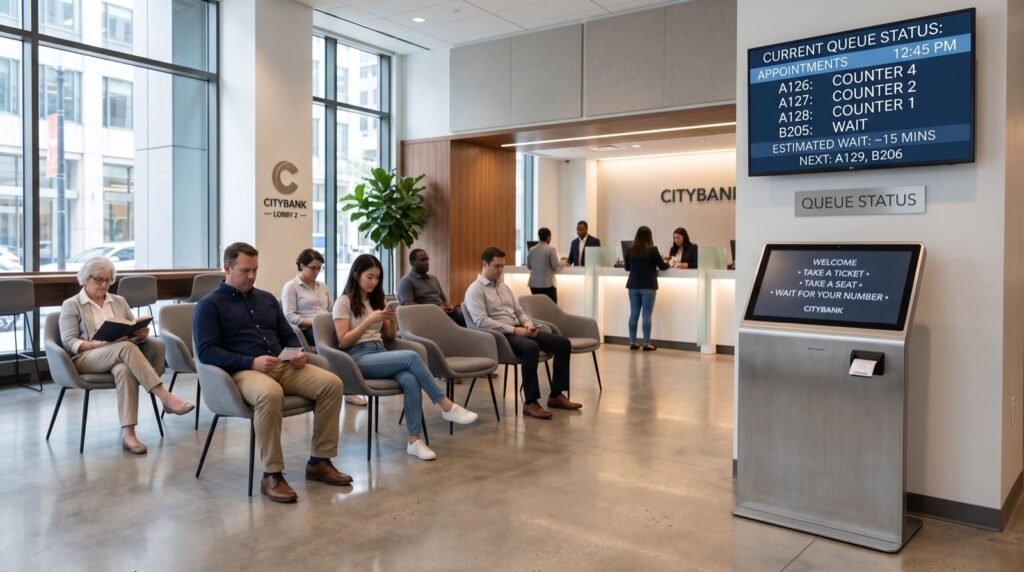
A queue management system replaces the physical scramble with a calm digital process. The flow is simple and proven:
- Ticketing: the visitor takes a ticket from a kiosk or scans a QR code.
- Routing: the system directs them to the correct service counter.
- Calling: screens and audio announce each ticket clearly in Urdu and English.
- Serving: the agent handles the visitor and closes the ticket.
- Reporting: every step feeds a dashboard of live and historical data.
Local providers now bundle hardware, software, installation, and staff training into one package. A complete queue management system removes the guesswork by giving you a single accountable partner from kiosk to cloud dashboard.
Core Features for the Pakistani Market
| Feature | Why It Matters Locally |
|---|---|
| Urdu & English interface | Serves every customer clearly and inclusively |
| SMS notifications | Lets customers wait comfortably, not in a crush |
| Priority handling | Fair service for elderly and special-needs visitors |
| Cloud reporting | Compare branches across cities from one screen |
| Scalability | Add counters or branches without a full rebuild |
Which Sectors Gain the Most?
Any high-traffic environment benefits, but a few sectors see the fastest payback in Pakistan.
Banking and Telecom
Branches separate quick transactions from advisory visits, cutting perceived waits and improving compliance records with clean logs.
Healthcare
Hospitals manage registration, consultation, and pharmacy queues in one flow, easing crowding and giving patients calm, clear guidance.
Government Service Centres
High, unpredictable volumes are tamed by structured ticketing, keeping citizens informed and reducing friction at busy counters.
Extending Efficiency to the Drive-thru
Indoor queues are only part of the picture. Restaurants, pharmacies, and banks in Pakistan are increasingly adding drive-thru lanes to serve customers without parking. The same efficiency mindset applies outdoors.
A modern Drive Thru System in pakistan combines clear-audio intercoms, digital menu boards, and lane timers so every car is served quickly and accurately. Faster lanes mean more customers served per hour and fewer drive-offs during rush periods.
Measuring Success After Installation
Buying the system is only the start. The businesses that win are the ones that treat the dashboard as a daily management tool, not a report they open once a month.
Track a small set of numbers and act on them:
| Metric | What It Tells You | Action If It Slips |
|---|---|---|
| Average wait time | Overall service speed | Add staff at peak hours |
| Abandonment rate | Customers leaving early | Review routing and signage |
| Service time per counter | Agent efficiency | Retrain or rebalance load |
| Peak-hour volume | Demand patterns | Adjust rosters and breaks |
From real deployments across Pakistani branches, the single biggest gain often comes from simply moving staff breaks away from peak windows once the data reveals them. That change costs nothing and shortens waits immediately.
Turning Data Into Better Service
- Weekly reviews: spend ten minutes each week reading the dashboard with your team.
- Set targets: agree a maximum acceptable wait and hold the branch to it.
- Reward improvement: recognise counters that consistently beat their service-time goal.
How Do You Choose the Right Vendor?
Begin with your busiest hour and size the system for peak demand, not the average day. Confirm the vendor supports Urdu and English, offers responsive local service, and can scale as you add branches.
Always request a reference. A confident supplier will connect you with existing clients who behave like trusted professionals and can speak honestly about uptime, training, and after-sales support. Finally, compare total cost of ownership, not just the sticker price, so hidden support and expansion costs do not surprise you later.
Frequently Asked Questions
How much does a queue management system cost in Pakistan?
Cost depends on the number of counters, branches, and features you need. A single-branch setup is far cheaper than a multi-city cloud deployment, so ask for a tailored quote after a short site assessment rather than relying on generic pricing.
Does the system support Urdu?
Yes. Any reputable system sold in Pakistan offers full Urdu and English kiosks, screens, and audio calls. Confirm this is included as standard before signing your agreement.
Can I run queue and drive-thru systems together?
Absolutely. Many vendors supply both, which simplifies integration and support. Using one partner means a single contract, unified training, and one contact point when you need help.
How fast can it be installed?
A single-branch installation is often completed within a few days, including training. Larger multi-branch projects take longer due to networking and phased rollout, but a good vendor shares a clear timeline upfront.
Conclusion
In 2026, an organised waiting experience is a genuine competitive edge. A well-chosen queue management system brings order, fairness, and hard data to any busy Pakistani branch, while a smart drive-thru setup extends that speed to the lane. For wider service-quality benchmarks, the standards published by the International Organization for Standardization are a helpful reference. Plan for your peak, choose a reliable local partner, and let shorter waits build lasting customer loyalty.