
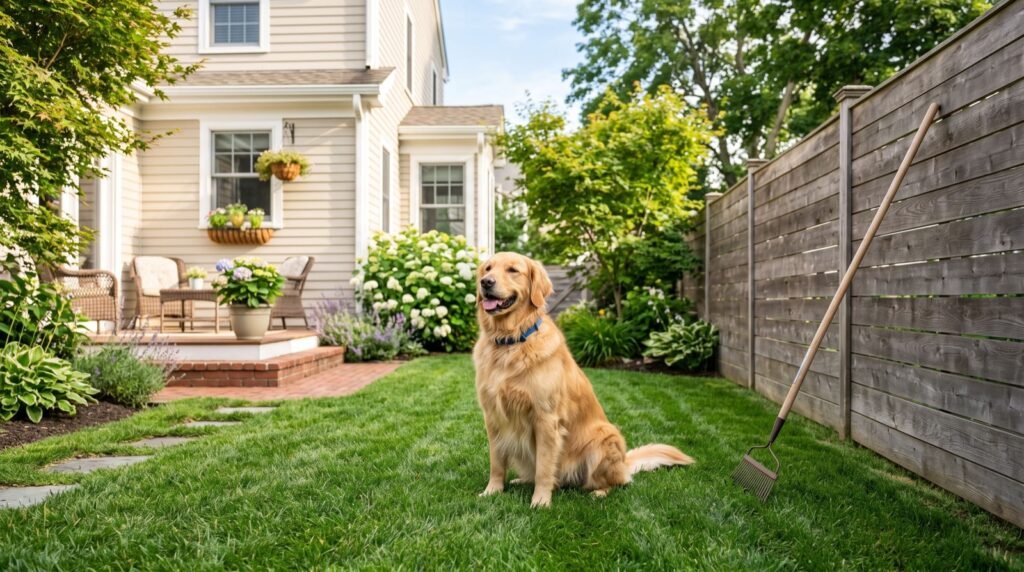
Every dog owner who takes pride in a green backyard eventually stumbles onto the same frustrating discovery: pale, straw-colored patches scattered across an otherwise healthy lawn. Most people blame urine, and while that plays a part, solid waste left to sit is a quieter and often more stubborn offender. Understanding the connection between what your dog leaves behind and the condition of your grass is the first real step toward keeping your turf thick and green.
The encouraging news is that lawn damage from pet waste is almost entirely preventable, and reversing existing damage is easier than most homeowners assume. This guide breaks down exactly how waste affects soil and grass, how fast the harm accumulates, and the practical habits that keep a yard looking like something you would happily walk across barefoot.
How Dog Waste Actually Harms Your Grass
Contrary to old backyard wisdom, dog waste is not a helpful fertilizer. Cow manure works in gardens because cattle eat plants, but dogs eat protein-heavy diets, and the resulting waste is acidic and loaded with concentrated nitrogen and salts. When a pile sits on grass, those compounds leach into the soil directly beneath it, overwhelming the root zone. The grass cannot process that much concentrated nitrogen at once, and the blades respond the same way they would to a chemical spill.
On top of the chemical burden, waste physically blocks sunlight and traps moisture against the crown of the plant. Grass smothered under a pile for even a few days begins to yellow, and the longer it stays, the deeper the damage reaches into the soil structure below.
The Nitrogen Myth: Why Poop Isn’t Fertilizer
Nitrogen is essential for green growth, but there is a wide gap between a measured application and a dense deposit dropped in one spot. Lawn fertilizers are formulated to release nitrogen slowly and evenly across thousands of square feet. A single pile delivers the equivalent of a massive overdose to a patch the size of a saucer. The result is a burn spot: a scorched center ringed by a suspiciously lush green halo where diluted runoff actually did feed the grass.
That halo tricks people into thinking the waste helped. In reality it is the visual signature of uneven, damaging application, and the dead center is the part that will need repair.
Burn Spots, Bare Patches, and pH Problems
Repeated deposits in the same area do more than kill grass in the short term. They gradually shift the soil chemistry, raising salt levels and disrupting the pH balance that healthy turf depends on. Over a season, a favorite bathroom corner can turn compacted and inhospitable, so that even after you clean it up, nothing wants to grow back. This is why dog owners so often see a permanent bald patch along a fence line or beside a back step.
Compaction from repeated traffic makes it worse. When soil hardens, water runs off instead of soaking in, and new seed struggles to establish roots. Breaking that cycle starts with removing the source promptly and consistently.
Timing Matters: How Long Before Damage Sets In
Speed is your greatest ally. Waste removed within a day rarely leaves a lasting mark, because the concentrated compounds have not had time to fully saturate the soil. Leave it for three or four days, especially in warm, damp weather, and you cross from a cosmetic issue into genuine turf loss. In summer heat the timeline shortens even further.
This is exactly why a daily or every-other-day pickup routine outperforms a once-a-week marathon cleanup. Frequency, not effort, is what protects your grass.
Tools That Make Yard Pickup Painless
The single biggest reason people fall behind on yard cleanup is that bending, twisting, and wrestling with a flimsy plastic bag is genuinely unpleasant. The fix is better equipment. A sturdy long-handled Pooper scooper lets you clear the whole yard while standing upright, which turns a dreaded chore into a two-minute lap around the perimeter. When the task stops hurting your back, you actually keep up with it, and consistent pickup is the whole ballgame for lawn health.
Look for a tool with a wide mouth, a rake or jaw mechanism that grabs cleanly off grass, and a build that handles wet conditions without bending. The right tool pays for itself the first week you use it.
Repairing a Lawn That’s Already Suffering
If burn spots have already appeared, all is not lost. Start by clearing every deposit and giving the affected areas a deep, thorough watering to flush accumulated salts and nitrogen down past the root zone. Water generously for several days. Once you have diluted the soil, loosen the compacted top layer with a rake, add a thin layer of fresh topsoil or compost, and reseed with a grass variety that matches the rest of your lawn.
Keep the newly seeded patches moist and off-limits to the dog until the seedlings mature. Designating a separate gravel or mulch bathroom area can protect your recovery efforts and prevent the same spots from failing again.
When to Call in Help
Not everyone has the time, the mobility, or frankly the desire to patrol a yard several times a week, and that is a perfectly reasonable place to bring in support. Professional yard cleanup services and the dependable specialists who handle recurring pet-waste removal can keep even a large property spotless on a fixed schedule, protecting your turf without you lifting a finger. For owners who travel or manage several dogs, that consistency is worth every penny.
If you would rather handle it yourself but need better gear, searching for a Pooper Scooper nearby is an easy way to upgrade your routine before the next mowing. Either path works, so long as waste is not sitting on your grass for days on end.
Key Takeaways
- Dog waste is acidic and nitrogen-heavy, so it burns grass rather than feeding it.
- Burn spots with a green halo are a warning sign of concentrated, uneven nitrogen.
- Repeated deposits raise soil salt and pH, eventually creating permanent bald patches.
- Removing waste within 24 hours prevents almost all lasting turf damage.
- A long-handled scooper makes frequent pickup fast enough to actually maintain.
- Existing burn spots can be flushed with water, reseeded, and fully recovered.
A Greener Yard Starts With a Simple Habit
Protecting your lawn from pet waste is not about heroic weekend effort; it is about small, consistent action backed by the right tools. Clear deposits quickly, water damaged spots to flush the soil, and give your dog a designated area when you can. Do that, and the mysterious yellow patches that plague so many pet owners simply stop appearing. A healthy, uninterrupted stretch of green is well within reach, and it starts the moment you commit to picking up before the grass ever gets the chance to suffer.